
Indonesia is the country with the biggest number of Muslims in the world. Fr. Matteo Rebecchi, Xaverian Missionary, worked in the interfaith dialogue with Muslims for many years. In this episode, he shares with us powerful stories fruits of this dialogue.
Listen to the full interview clicking here!
How long have you been in Indonesia?
I have been in Indonesia from 1999 to 2017 and then I was assigned to the Philippines where I am living now.
What was your job there?
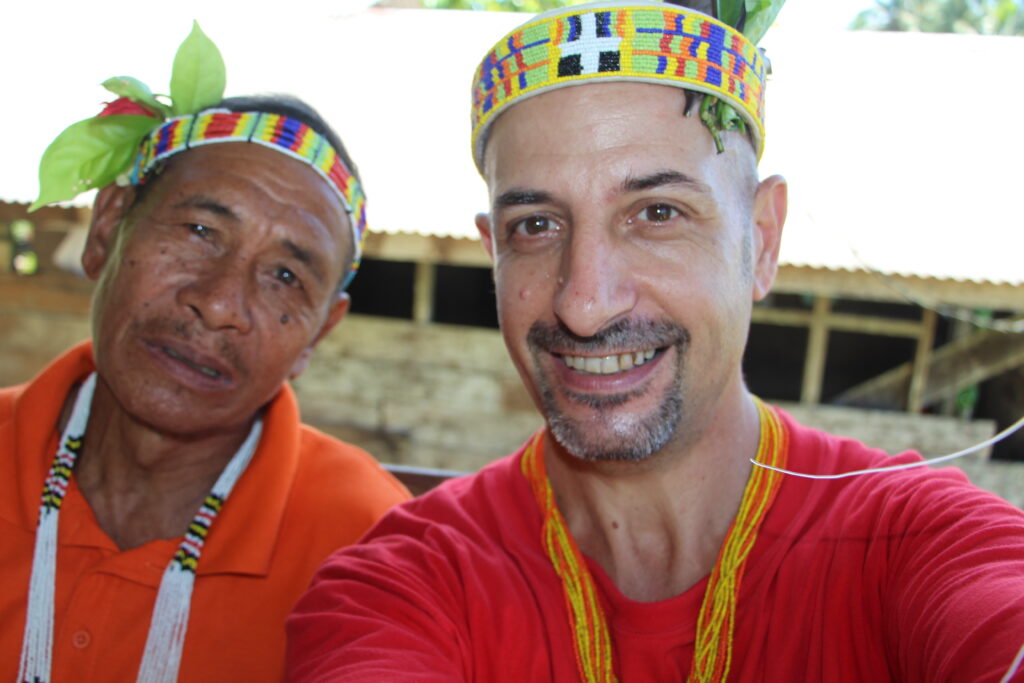
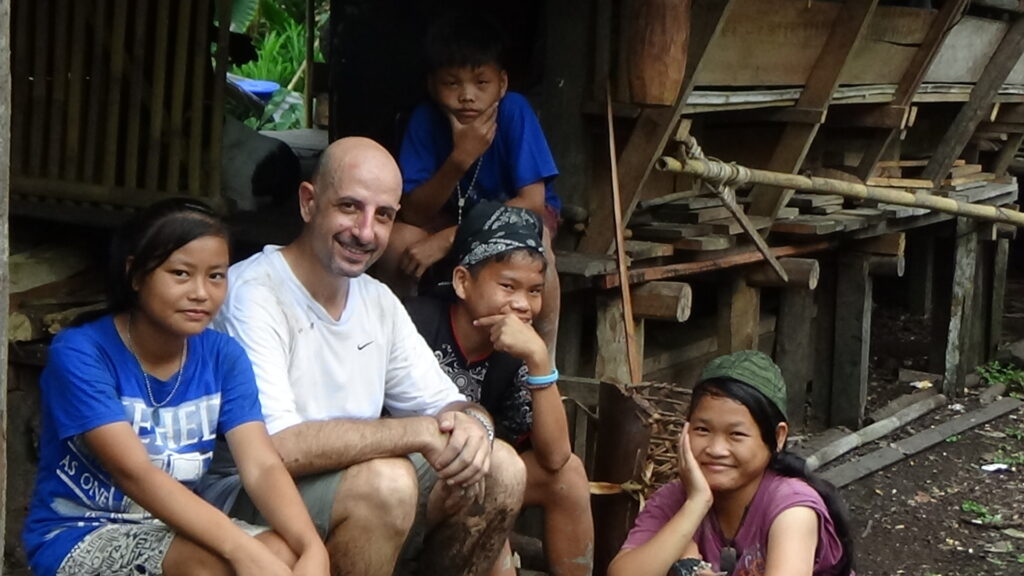
After studying the language in Yogyakarta, in central Java, I moved to Mentawai, an Archipelago in Western Sumatra. I was working in a parish in a very remote area, with no connections, no telephone, electricity only at night-time, no roads. We could reach the Christian communities on the island by means of boats, along the rivers and in the sea, or by walking in the jungle. The Mentawai culture is very much interesting for anthropologists, because of its particular kind of shamanism, and is it one of the most ancient in the whole Indonesian Archipelago. You still find people wearing loincloths and carrying bows and arrows. Just to give an idea, is very close to the reality of Amazonas.
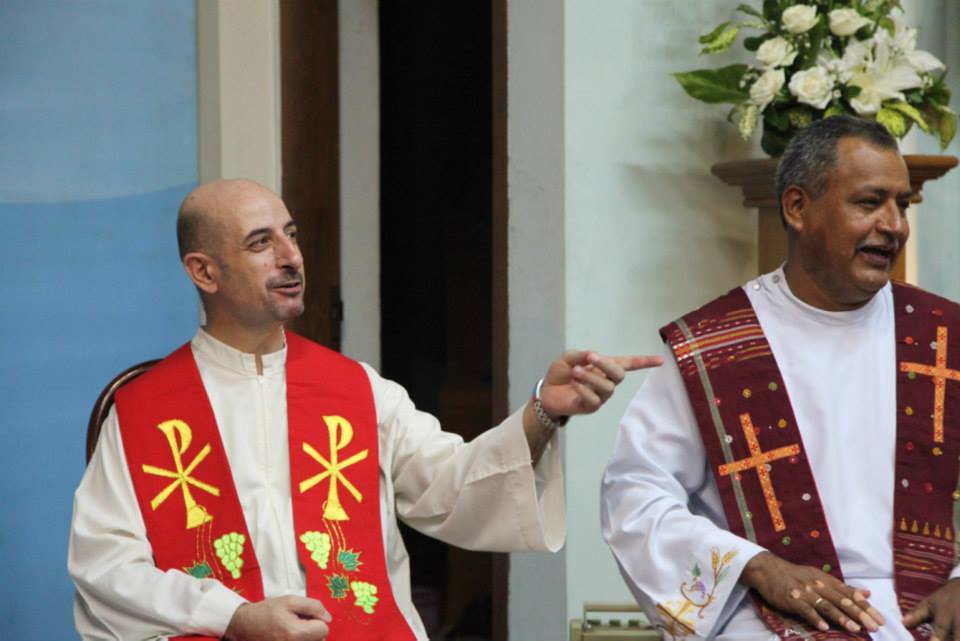
Then in 2006 I moved to Jakarta, where I was assigned in the Xaverian seminary as formator. There I had the chance to start the experience of accompanying our younger brothers towards the path of their personal growth as Christian and consecrated people for mission ad gentes.
In 2015 I went back to Mentawai, but only for 2 years. Then I was unexpectedly asked to leave Indonesia for working in formation in Manila, Philippines.
What Indonesia gave to you?
Many things. I am convinced that we, missionaries, are doing our work not out of sacrifice, but out of enjoyment. I am really grateful to have been given the possibility to leave my country for encountering new people, cultures, and religions. Don’t take me wrong, but besides loving and serving, it seems to me to live a perennial vacation, in the sense that every day you discover new things. The mission is really interesting. But, for answering your question, I really appreciated the soul of Indonesian people. It was my first contact with Asian culture, and it was a big surprise. I am struck by their way of welcoming people, their smiles, their politeness, and gentleness, both in cities and in the jungle, their patience, the ability to enjoy simple things, their calm attitude in facing problems, the trust in the Providence, their religiosity… Not everything is beautiful, of course, but I undeniably found many things that keep on challenging my being European and call for my personal conversion.
What means to be Christian in the country with the biggest number of Muslims in the world?
Indonesia is the country with the largest Muslim population in the world. Probably 1 out of 6 Muslims around the world are Indonesian. Nevertheless, Indonesia is not formally an Islamic state, and Shariah is not implemented as civil law, apart from the autonomous area of Aceh, in Sumatra. The 5 principles of the Nation, the so-called Pancasila, preserve the plurality and the rights of minorities, including Christians. Moreover, Indonesian Islam is traditionally tolerant and open to cultures and religions. It spread around the archipelago in the shape of Sufism and developed especially during the thirteenth century. Then at the beginning of the XIX century, returned pilgrims from Mecca influenced by Wahabism start spreading the Arabization of the Indonesian Islam, imposing Shariah and Arabic traditions. This trend is still going on, and it generates the ideologic conflict between a traditional and more tolerant Islam, and the more radical one, and I would say Arabic-like, expressions of it. Then, it is undeniable that it is not easy for many Christians to live their faith within a majority of Muslims. It is very difficult to get permission for building churches. Some move to Islam, in order to get a better job. On the other hand, discrimination makes many Catholics very committed and convinced of their own principles. We must also say that the situation is even more difficult for not recognized minorities, such as traditional religions, the Bahay, etc. At the same time, the rise of fundamentalism is threatening not only religious minorities but also moderate Muslims, which are considered betraying the purity of faith.

Would you share a meaningful story about the relationship between Christians and Muslims in Indonesia?
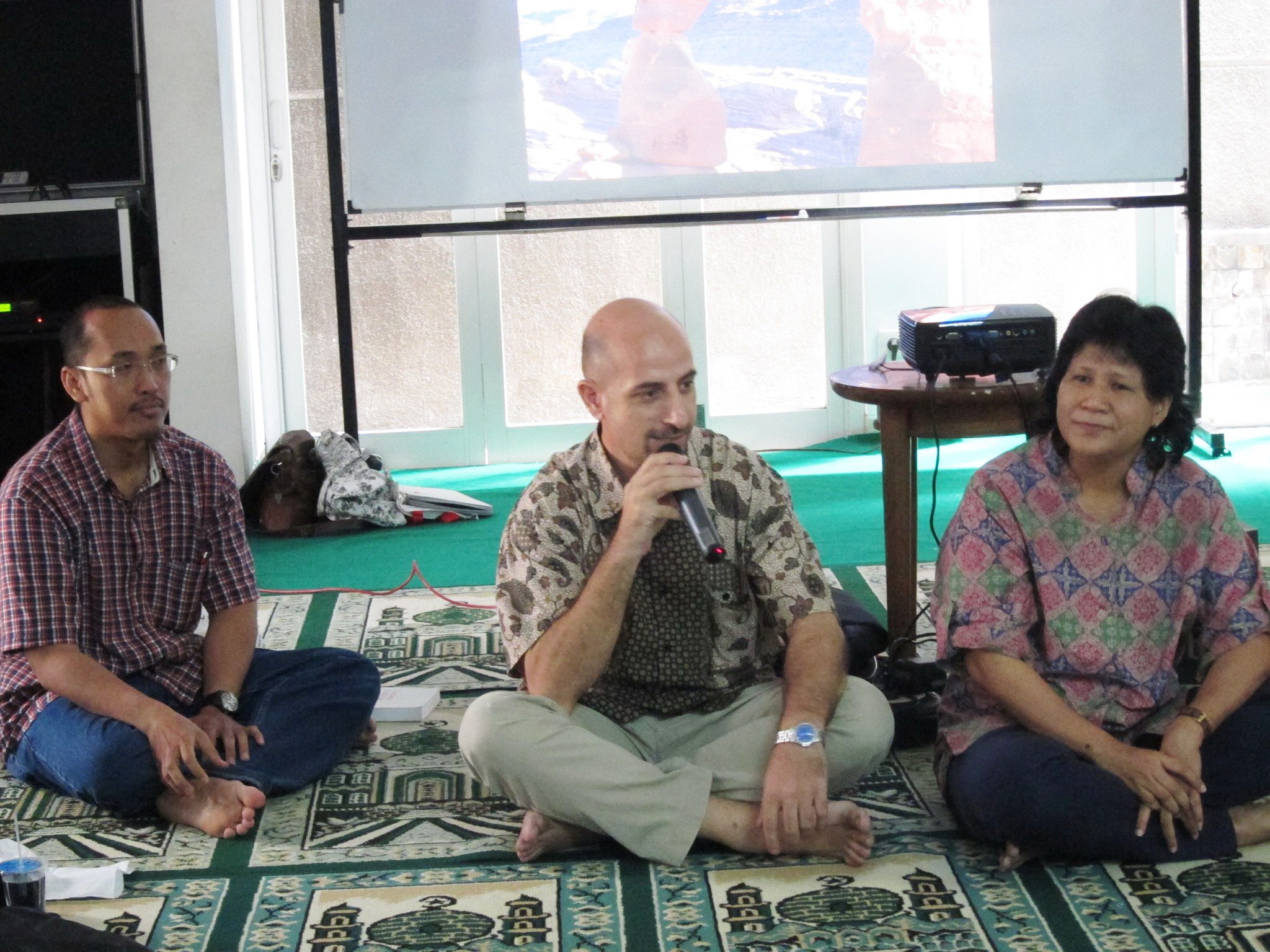
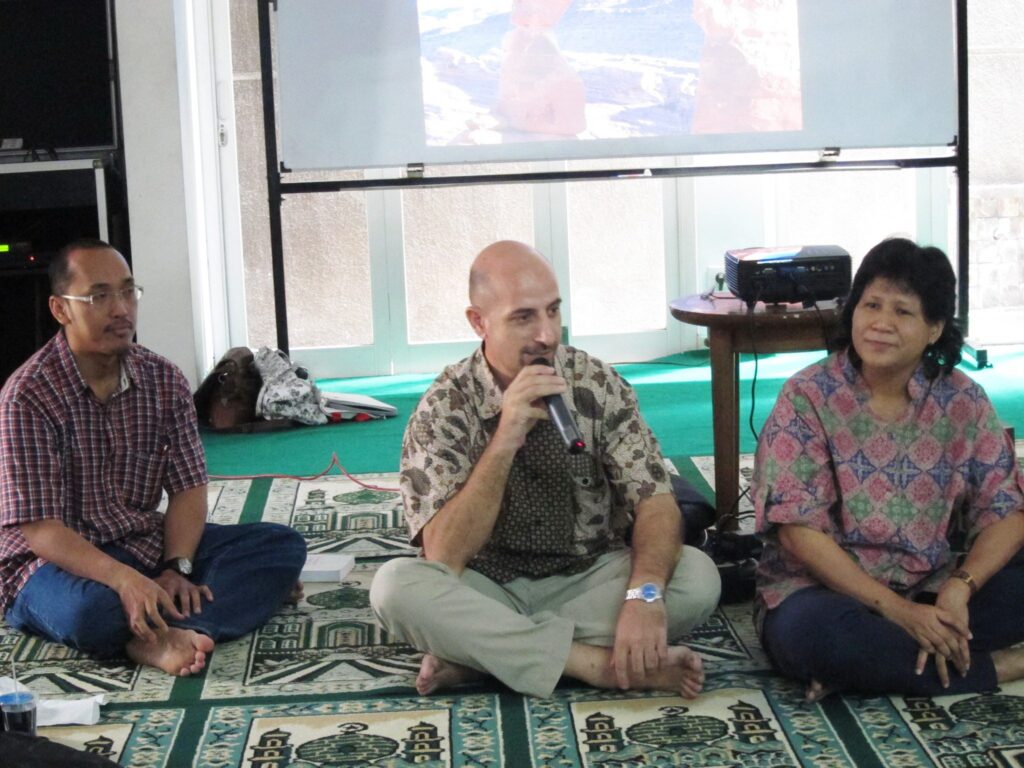
At the grassroots, but also among leaders, there are beautiful examples of collaboration and authentic fraternity. After several terroristic attacks to churches around the year 2000, Muslim people made themselves available for guarding churches during the celebration of Christmas. I myself had the chance to attend classes in an Islamic college. Then I was warmly welcomed by a community of Sufi in Jakarta. I used to attend their monthly conferences and teachings, sitting down on the carpet among them… just to get close and become friends. After several meetings, they ask me, together with some other friends, to share our Christian experience.
As time went by, I become closer to Yusuf Daud, an Ustadz from the Thaha Sufi group. Once, it was Idul Fitri, that is the feast at the end of the Ramadan, and Ustadz Yusuf Daud phoned to invite me to lunch for the traditional family gathering at the end of Ramadhan. I explained to him that I had already eaten and that so I would have gone to see him around 15:00. I was tired because I had already pay a visit to another Muslim family before lunch and so decided to rest. When I got his place, it was past 15:00 and again he asked me to have lunch with him. To my surprise, the table was still prepared and Yusuf Daud had not had lunch yet because he was waiting to celebrate Idul Fitri together with me (and this was after a full month of fasting!). I really felt his personal love for me. On another occasion, Ustadz Yusuf Daud, his wife Citra, and other friends came to our community for sharing their experience on Islamic fasting. I remember Citra saying to me at the end of the meeting: “Tonight we did not make an only dialogue. Tonight we have become one family!”
These and other experiences have convinced me that interreligious relationships should start from the desire of loving each other. It is for this reason that I do not like too much the words “Interreligious Dialogue”. I’d rather prefer to think about is as mutual love among people of different beliefs, a kind of “interreligious mutual love”. It is what the Gospel ask us to do. And, if there is love among us, then it will be easier to work together, to share our ideas and theological convictions, to accept different opinions, to build fraternity, and to get closer to God.

What do you think about the religious pluralism in our modern societies?
It is a reality. We must acknowledge it. Dreaming a homogeneous society form the point of view of beliefs, it is not a dream, it is just impossible. This is the dream of ISIS or of the Nazist. The real point is not to dream uniformity, but how to being mature enough to be able to deal with diversities, how to accept and respect them in a constructive way. We Christian should learn how to deal with diversity from our vision of God, from our Trinitarian foundation, since Trinity is unity and diversity, real diversity, at the same time. Mutual love is able to make the Persons of the Trinity one. The same love should be the foundation of our living in a plural society.
In my own experience, my brother used to be Catholic but now does not believe in God and does not go to church anymore. We have a different point of view. He does not agree with me on many issues. But we are still brothers and can love one another. So, the real problem is how to integrate differences within society, and only love can do it. I do believe that believing in Trinity is of great help in building fraternity within society, an on-going game of unity and diversity.
What Christianity may share with believers of other religions?
I have realized that the paternity of God and his unconditional love, are very peculiar in Christianity. If I think of the traditional religion of the Mentawaian, they believe in God, but he is very far. His name is Ulaumanua, which means beyond the skies. He is existent, but not really close to human beings. As far as I understand the paternity of God is not also acknowledged by the Muslims.
What Christians may learn from other religions?
Of course, we can learn many things. Any religion has developed particular paths of spirituality, morals, theology… What Buddhism has developed in terms of meditation, asceticism, the vision of creation can become important insights for a Christian. Muslims have a very strong sense of submission to the will of God and attachment to the Holy Book that many Christians do not have. At the same time, they are very serious in ascetical practices, like fasting during Ramadhan. We can learn a lot from their spirit of devotion to God and to his will.
But even more than learning and aiming at a mixture of practices and teachings, we are called to become ourselves, to deepen our respective spiritualities and ways of living. Unity, once again, is possible in diversity. We do not need to create a new synthesis of our religions which will end up in simple homologation of our beliefs. The real point is how to love one another, a kind of mutual interreligious love. Pope John Paul II in Madras, India, in 1986 said “By dialogue we let God be present in our midst; for as we open ourselves in dialogue to one another, we also open ourselves to God.” So, by means of this “interreligious mutual love”, we do not mainly discover the richness of the other’s spirituality, but rather together, we get closer to God! This is contemplation.
How do you see future of the mission?
The mission is facing a big crisis, especially the specific mission ad gentes, which aims at preaching the good news to non-Christian people. There are many reasons for that, not last the theological understandings that have put aside the old conviction that those who are not baptized cannot be saved. Moreover, the pope recently said that the mission is not anymore geographically characterized, since we do not see any longer Christian nations that send missionaries to non-Christian countries (Address to the Roman Curia, Dec 21, 2019). So, the mission is now everywhere and you do not need to leave your country for becoming a missionary. Theologians are studying the evolution of the concept of mission.
I think that many things, methodologies, and insights will change in the future. What will remain is the core of the mission ad gentes, which is the love of the Father for every person and his desire to make this love be felt and acknowledged. The missionary gives his or her life hoping that others can finally discover that they are non forsaken orphans, but instead beloved children of our Heavenly Father. This is, in my vision, the core of mission ad gentes. Interreligious Dialogue is one possible activity aiming at discovering, together with this immense love of God for each one of us. And this is also a clear call to conversion, to new life, because once a person has discovered the immense love of God for him or her, everything is transformed.
Would you like to share a message with our listeners?
As a missionary, I would suggest our listeners reflect upon the gift we have received. We are beloved children. If we have experienced this immense love of God in our life, it will be natural to share it with others. The world needs this good news. It will be the basis for building new relationships and finding ourselves being part of the same human (and divine) family.
Thank you very much Pietro and to all of you.
2 thoughts on “Interfaith Mutual Love”
Awesome blog! Thank you for the information you shared. I appreciate it.
Thank you for your comment, Word Peace!
For more stories of Interfaith Dialogue and much more, visit my podcast: anchor.fm/pietro-rossini or look for “Mission Outlook” on whatever Podcast provider.